
.png)


Safety meetings often walk a fine line between legal necessity and genuine engagement, and the difference is usually obvious the moment you walk into the room.
On one side, you have the compliance version: a supervisor working through a checklist whilst workers stare blankly, arms crossed, waiting for it to be over. Nobody asks questions. Nobody volunteers to do anything. The meeting closes, the box gets ticked, and everyone goes back to what they were doing.
On the other side, there's something that actually looks and feels different. People are leaning in. There's a back-and-forth. Someone on the crew brings up a near-miss from last week that nobody had officially reported, and suddenly the whole group is problem-solving together. That's not just a meeting: it's a positive safety culture in action.
The gap between these two rooms doesn't come from compliance requirements or meeting frequency. It depends on whether frontline workers feel like participants or passengers.
So how do you shift from one room to the other? If you're looking to rebuild that connection between your frontline teams and your safety processes, toolbox talks are exactly the right place to start, but only if you're willing to rethink how you run them.
As frontline workers become increasingly disconnected from safety processes, the main question is how to conduct a safety meeting that turns the room into a space where everyone has a say and real change happens
The Participation Gap: Why Nearly 40% of Workers Stay Silent
A recent WHS Radar report highlighted a hard truth: almost 40% of workers don't think they have the power to have a real say in safety discussions. When a significant portion of your team remains silent, you're missing important risk information, often from those closest to the risks.
Our feedback from the field shows a similar pattern. Safety professionals and leaders recognise that the two biggest hurdles are making the meeting content really relevant to the actual daily work and ensuring people feel psychologically safe enough to speak up.
This isn't just a "nice-to-have": besides worker engagement being a regulatory requirement in Australia and New Zealand, 42% of workers say that communication and consultation are the second most important factors in good H&S practices, according to the WHS Radar report. But many people still see safety as something that's imposed upon them rather than something they can actually be a part of.
The disconnect often stems from the belief that safety protocols and production pressures are at odds. When workers feel like their health and safety aren't as important to their leaders as getting things done, they naturally lose interest.

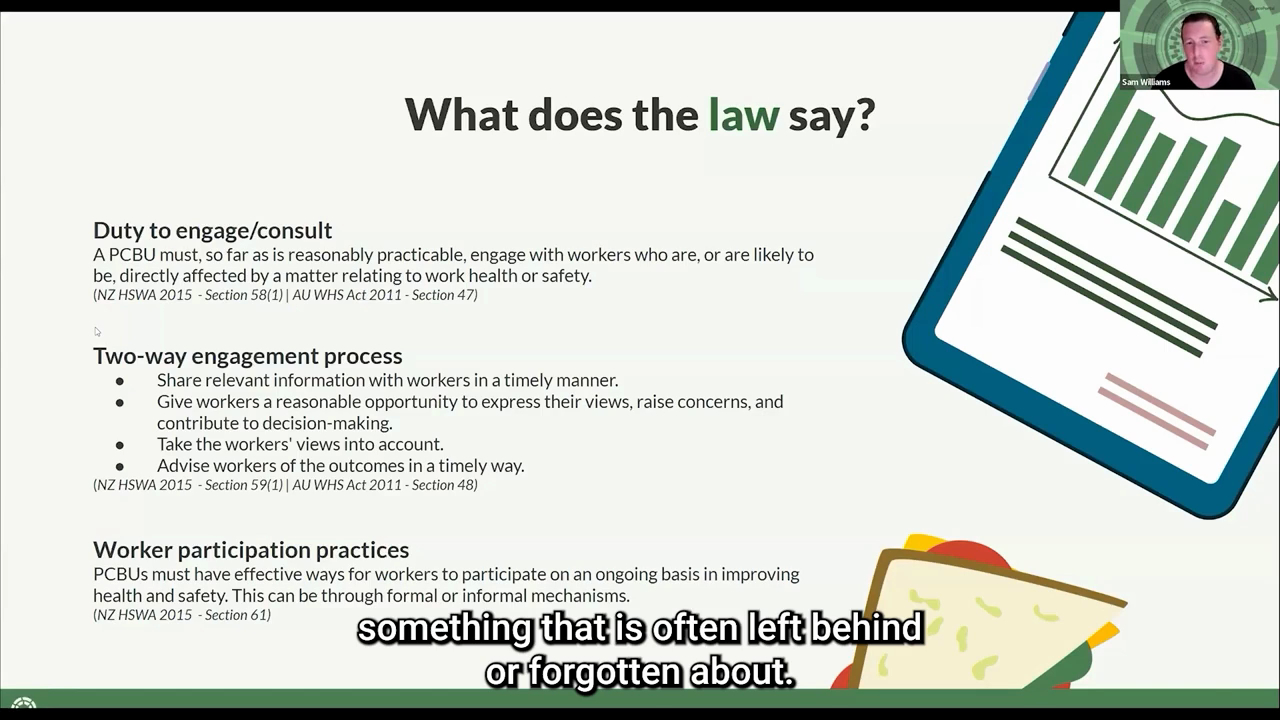
Is your safety program a monologue or a dialogue? Watch this snippet to learn why genuine, two-way dialogue is a legal cornerstone of effective safety leadership.
The Business Case: Why are Health and Safety Meetings Important?
Legal requirements establish the baseline. When PCBUs find hazards, put controls in place, suggest changes, or make procedures, they must talk to workers. But compliance alone won't create the safety culture you need.
Data from New Zealand's Public Service Association shows that "extensive and trusting" conversations at work lead to the best safety outcomes and business performance. On the other hand, meetings that are full of conflict or mistrust deliver poor results.
The mechanism is straightforward: workers who help build safety solutions care about them. This sense of ownership leads to:
- Fewer accidents and near-misses;
- Proactively managed risks;
- Lower staff turnover;
- Higher operational efficiency.
Safety goes from being a duty to a shared responsibility when people feel heard and see their ideas make a difference.
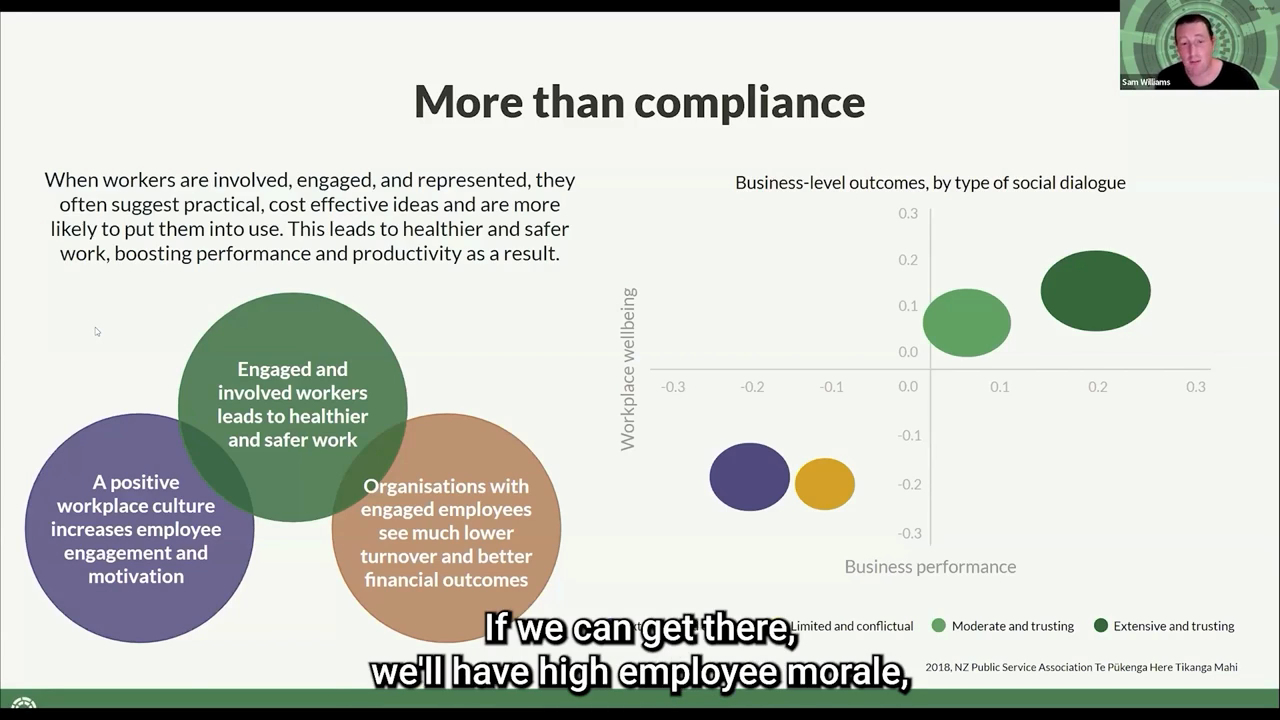
Discover the “Ownership Effect”. Learn how involving your frontline in building safety solutions directly impacts employee morale, retention, and your bottom line.
How to Conduct a Safety Meeting that Drives Participation?
Not all safety meetings have the same goal, and understanding these differences can help you plan more effective sessions. Use a toolbox talk template to ensure variety and structure across these categories:
Proactive meetings
Before incidents happen, you should establish new policies, train people on specific risks, or assess new ones. These forward-looking sessions build capability and knowledge.
Reactive meetings
Respond to specific events by figuring out what went wrong and changing the controls as needed. Although necessary, reactive sessions should be balanced with proactive planning to ensure the safety calendar remains forward-looking.
Regular meetings
Daily pre-starts, weekly safety toolbox talks, and monthly committee meetings are all regular opportunities for people to continue participating. The challenge here is making sure these stay useful and don't turn into repetitive checkbox exercises.
No matter the type, there must be clear safety meeting minutes documenting:
- Who was there;
- What was discussed;
- What decisions were made;
- And what actions were assigned for follow-up.
This gives you the compliance trail you need and the accountability that workers expect.
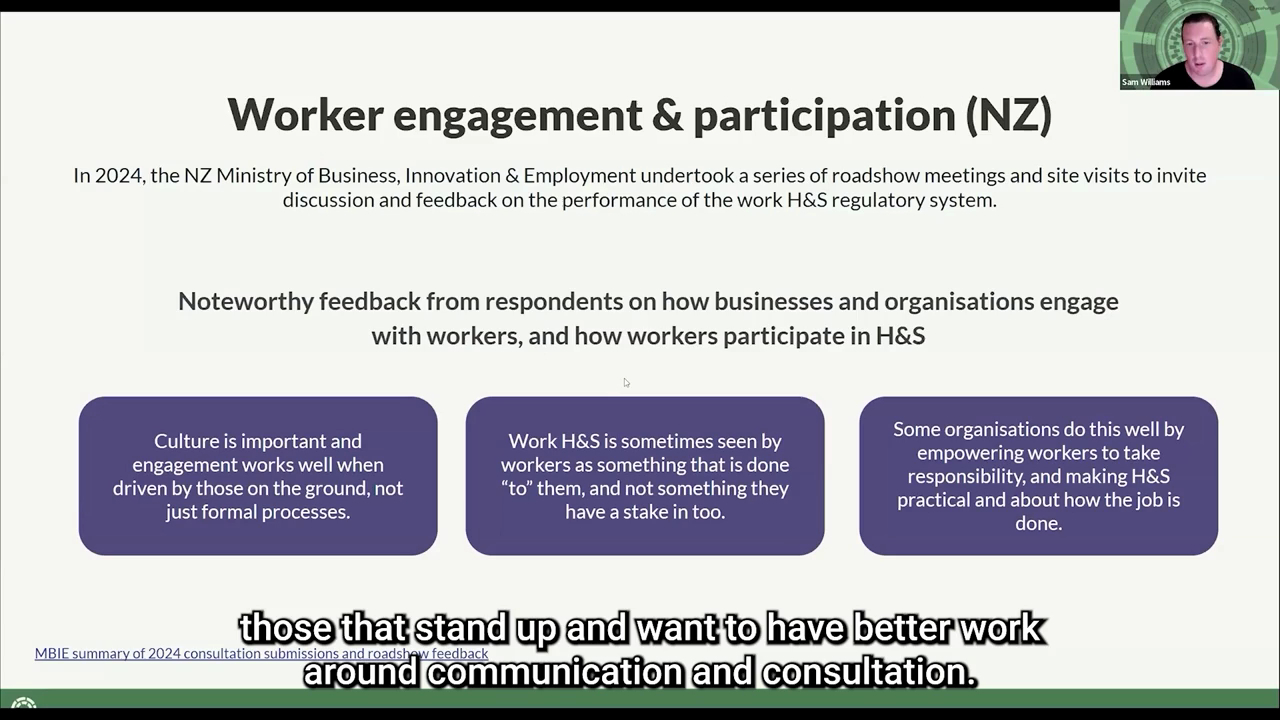
Stop “doing safety” to your workers. See how empowering local champions can shift the perception of safety from a mandatory process to a shared organisation-wide responsibility.
Safety Meeting Software as an Enabler, Not a Replacement
Keeping track of meetings across sites, teams, and topics takes time that most safety leaders or team members simply don’t have. This is where intelligent safety solutions provide critical support: not to replace human conversation, but to make the mechanics easier so that teams can focus on the conversation itself.
Modern tools allow you to automatically log minutes, identify trending topics, and create dashboards that show exactly where your safety culture needs attention. Health and safety managers can see how people are engaging right away, instead of having to go through dozens of PDFs by hand.
Integration capabilities mean you can have everything in one place, recent incidents, newly discovered hazards, and critical risk information, without spending hours pulling together information manually.
Live dashboards highlight the relevant information that aligns with your meeting cadence, whether that is a weekly toolbox talk or monthly safety council meetings. When a team leader can show last week's near-miss directly in the meeting, the conversation becomes relevant right away.
Final Words
Safety meetings are among your most powerful tools for building workplace culture. When structured thoughtfully and supported appropriately, they move beyond legal obligation to become forums for worker expertise, collaborative problem-solving, and continuous improvement.
People need to feel safe and genuinely involved to be engaged. Similarly, workers need to know that their voices matter and that their feedback leads to real change. Technology can handle the heavy lifting of administration, but trust, follow-through, and respect for the knowledge of frontline workers remain the foundation of truly effective safety meetings.
Key Takeaways
-
The worker participation gap is real: almost 40% of workers feel disempowered in safety discussions, meaning organisations miss important risk information from those closest to hazards. Creating psychologically safe spaces and ensuring follow-through on raised issues are essential first steps.
-
Effective meetings require structure and variety: proactive, reactive, and regular meetings each serve distinct purposes. The most successful programs blend all three types while maintaining clear records of attendance, discussions, decisions, and actions to promote both compliance and accountability.
-
Close the loop to build trust: Workers need to see that their feedback leads to real change. Follow-through is critical.
-
Technology amplifies, not replaces, human engagement: AI meeting summaries, integrated incident data, and visual dashboards make administrative tasks easier, allowing leaders to have more meaningful conversations. When meetings are directly related to real hazards and recent incidents, conversations become relevant to workers' daily experiences.
Want to see how ecoPortal's Safety Meeting Management Software can transform your engagement approach? Book a demo today!
.png?width=352&name=Playbook%20The%20Coaches%20Guide%20to%20Driving%20Real%20Change%20in%20Safety%20(1).png)
.png?width=352&name=SS6%20Designing%20for%20Error%20(1).png)
.png?width=352&name=How%20to%20De-escalate%20an%20Aggressive%20Customer%20(1).png)
.png?width=352&name=_Paper%20Safe%20Why%20Compliance%20Isn%E2%80%99t%20Enough%20to%20Keep%20You%20Out%20of%20Court%20(3).png)
