
.png)
.jpg)
.jpg)
.png)
%20(1).jpg)

Storytelling in H&S: The “Why” Behind Getting Home Safe

When storytelling starts, reporting goes up. That can be a real challenge, but at the end of the day, that's what we want. That's when we know we're doing the right thing.
- Heidi Lance
About this Session
In the world of health and safety, the traditional toolkit is heavily reliant on facts, figures, checklists and compliance forms. Yet, during typical safety inductions, leaders often watch their team’s eyes glaze over.
In this session of the Safety Voices webinar series, host Craig Bleakley sat down with Heidi Lance, Director of Real Learning New Zealand, to discuss how safety professionals can move away from passive box-ticking and towards genuine cultural connection. Drawing from her extensive experience transforming large-scale workforces, Heidi shared actionable insights on why storytelling is an essential safety strategy, the science behind how our brains process narratives, and a practical framework anyone can use to tell stories that stick.
The OWL Storytelling Framework
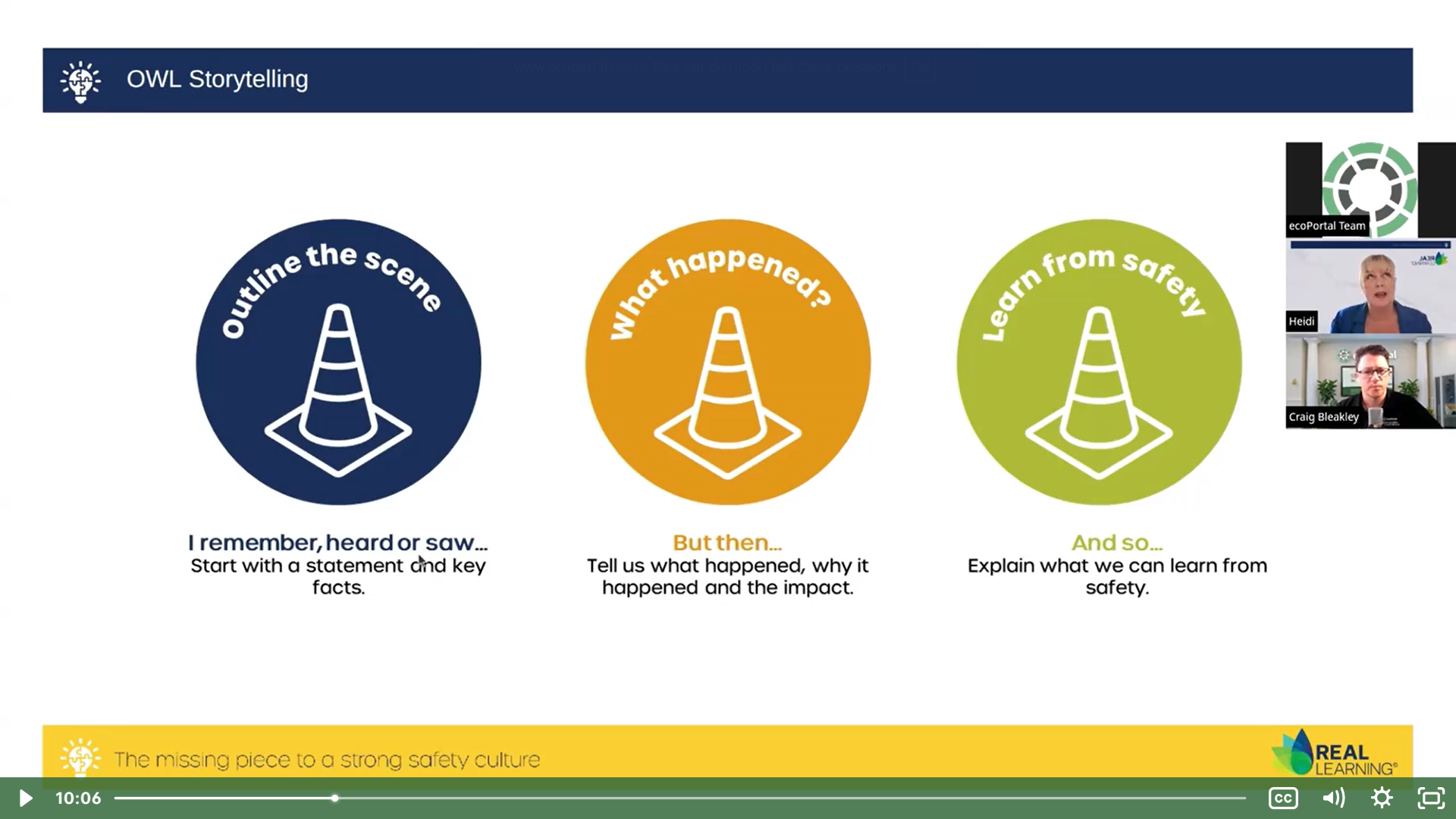
For frontline workers and leaders who find storytelling intimidating, Heidi introduces a simple, memorable three-step structure: The OWL Framework. A good safety story should:
- Outline the scene: “I remember, heard or saw”
- Tell what happened: ˜But then…”
- And learn from Safety: “And so”
The OWL structure works because it's quick, real, easy to remember, and gets straight to the point, especially valuable in pre-starts, toolboxes, and team meetings.
The Pure Science: Why Storytelling Works
For data-driven leaders skeptical of narrative-led approaches, Heidi points directly to cognitive neuroscience:
- Neural Coupling: When a speaker tells a story, the listener’s brain waves begin to mirror the speaker's brain activity, creating a shared neurological experience.
- Brain Activation: While data only triggers the language processing parts of the brain (Broca’s and Wernicke’s areas), a well-told story activates additional regions, including the motor, sensory, and frontal cortex.
- Emotional Memory Anchor: When emotion is triggered, the brain releases chemicals that prioritise that information, storing it much more deeply in long-term memory than a list of statistics.
Key Takeaways from the Session
1. Ditch the Token 'Safety Share'
Many organisations have built a ritual where meetings begin with a safety share, but it often becomes an empty gesture. A participant might mention seeing a cyclist without a helmet, everyone nods, and the meeting moves on. For a story to drive cultural change, it must include the 'So What?' factor, linking the event directly to the context of the team and the specific lesson that needs to be internalised.
2. Vulnerability is a Leadership Catalyst
Leaders are traditionally conditioned to look in control and have all the answers. However, when a senior executive stands up and shares a raw, imperfect story about a mistake they made or a traumatic event they witnessed, it completely resets the room.
3. Storytelling Drives Psychological Safety and Reporting
Why does a leader’s story cause frontline near-miss reporting to go up? Because it normalises imperfection. Employees often withhold reporting near-misses not out of apathy, but because they fear looking foolish or getting into trouble. When leadership opens up about mistakes, it builds the psychological safety required for workers to speak up early.
Speaker

Heidi Lance
Director at Real Learning New Zealand
Heidi is passionate about driving real culture change. As the Director of Real Learning New Zealand, she leads a dedicated team in designing and delivering high-impact blended learning solutions that foster safer, healthier, and happier people in the workplace.
Her approach is genuinely pragmatic, focusing on making a tangible difference by equipping learners with practical knowledge, skills, and tools they can immediately apply.
Watch our webinars
Learn the latest and greatest health and safety strategies from global industry leaders.

Our Partners
We partner with a range of innovative health and safety organisations to bring you expert insights into the most pressing topics concerning health and safety today
All webinars

.png?width=352&name=Workplace%20Fatalities%20Understanding%20the%20Family%20Impact%20and%20Communicating%20Better%20(1).png)