


In Short
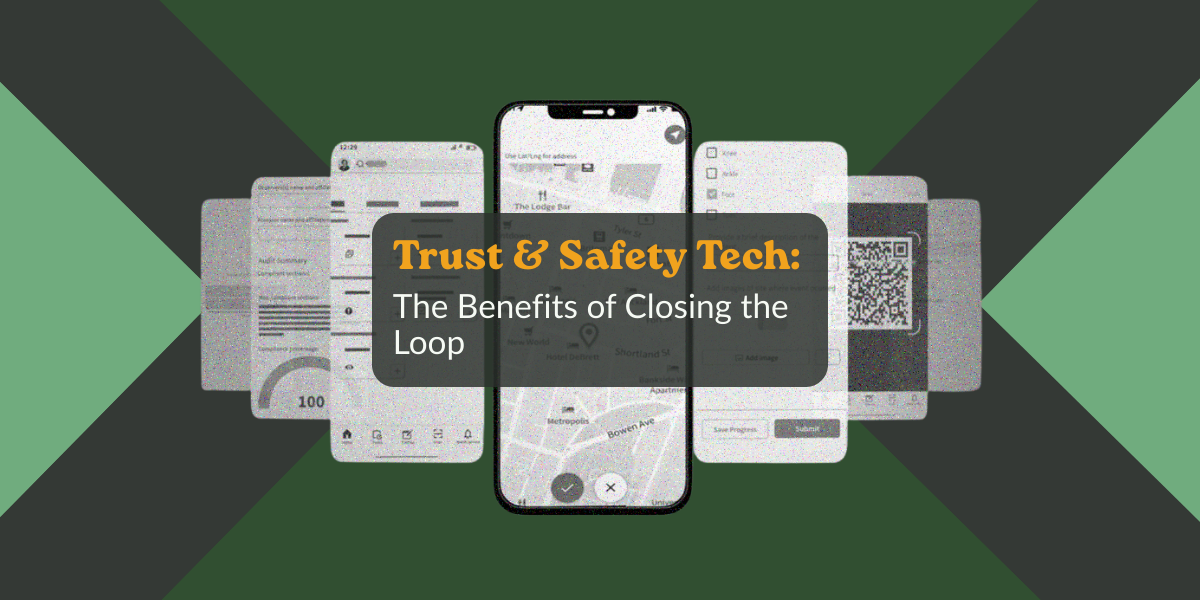
Safety technology thrives on trust, particularly when people are confident that reporting issues will lead to action. Closing the loop is a principle that can transform a report into a transparent circuit to build trust, and foster a safer workplace, as seen in the Alexander Group's case study.
Get fresh H&S insights weekly
Safety technology is only as good as the trust people give it.
It’s a common trap many companies fall into: assuming that installing the latest high-tech system, complete with every possible bell and whistle, will be the silver bullet that improves your safety outcomes.
On paper, it makes perfect sense. After all, more data, real-time tracking, and earlier warnings seem like an obvious solution to age-old risks.
So why do we still hear stories about "perfect" safety systems showing no signs that anything is going awry, right up until the moment of crisis?
We all want to believe in technology that keeps us safe. There’s a comforting logic to the idea that a modern, sophisticated system will act as a kind of digital safety net. But the reality is that safety isn’t something technology can deliver in a vacuum.
It’s a human practice that people must actively participate in every single day, and that participation doesn’t come from a mandate or a manual; it depends entirely on Trust.
What is Trust in Safety?
In a technical or industrial environment, trust is much more than a "vibe".
Defined, trust in safety is the confidence a person has that the data they input and the tasks they complete will actually make their life better or their workplace more secure. Without that confidence, there is very little incentive to take time out of a busy shift to engage with a digital system.
So what does high vs low trust look like?
In low-trust environments, even the most expensive systems struggle to provide value. When people don’t believe their input matters, they stop reporting issues, they "soften" the truth to avoid administrative headaches, or they disengage altogether.
In these scenarios, technology doesn’t fail loudly with an alarm; it fails silently. The data remains clean and the dashboards look reassuring, but the reality on the ground goes unreported.
In high-trust environments, the opposite happens. Even simple tools can surface uncomfortable, sometimes inconvenient truths. People speak up earlier with clearer signals, allowing risks to be addressed before they turn into incidents.
While there are many ways to build this trust, one of the most effective technical levers available to us is the concept of "closing the loop."
Moving Beyond One-Way Reporting
One of the primary reasons safety tech loses the trust of the workforce is that it often feels like a one-way street.
In many organisations, reporting a hazard can feel like dropping a handwritten note into a deep, dark well. You sent it, but you have no idea who — if anyone — received it.
Closing the loop is the process of transforming that one-way report into a complete, transparent circuit. It makes sure that your signal travels through a full cycle: beginning with the initial feedback, moving through to action or investigation, and finally, a confirmation sent back to the person who raised the flag.
It’s important to note that closing the loop isn't the only solution to a safety gap, but it’s a vital one that's uniquely good at preventing a "culture of silence”.
When loops stay open, the confidence your team has can erode quietly leading by the feeling that their observations are ignored, ending inevitably with apathy.
By making sure that every report has a clear ending, technology stops being a mere monitoring tool and starts acting as a responsive partner in the worker's day-to-day life.
Why Responsiveness is the Engine of Reliability
The reason a closed loop is such a good trust-builder is that it provides immediate, human validation. Humans are hardwired for feedback; we need to know that our signals are being received.
So visibility of outcomes proves to us that the system isn’t just a "black box" designed for compliance, but is actually capable of making a tangible difference.
Take Alexander Group, for example.
As New Zealand’s leading compressed gas distributor, Alexander Group operates a massive network of bulk tankers and cylinders throughout the country.
In a decentralised logistics operation like theirs, distance is often the greatest enemy of trust. When you have drivers operating in isolation across hundreds of kilometers, it’s easy for them to feel like "just a number" behind a wheel.
This geographical disconnect can create a significant breakdown in safety culture.
Historically, a driver may identify a serious hazard, report it, and then hear absolutely nothing for weeks. Over time, that silence effectively "trains" people to stop reporting altogether. They were communicating with a system that seemed to be actively ignoring them.
Why bother flagging a risk if the letter just sits in a dead-letter office?
Alexander Group recognised that a truly effective safety solution isn’t just about collecting data; it’s about respecting the person providing it. They made the move to put safety directly into the hands of every driver via mobile tablets.
But the real magic wasn't just the ease of the input — it was the transparency of the feedback loop.
Now, drivers don’t just upload a photo and hope for the best; they can actively track the "status bar" of their report. They see the precise moment it’s been read. They see exactly who the resolution is assigned to. And most importantly, they see the final result.
This transparency is the difference between assuming a company cares and seeing proof that they are listening. It fundamentally shifts the driver's perception from being a data point to being a partner in safety.
The Compounding Benefits of a Functional Loop
As Alexander Group has proven, integrating closed-loop principles supports the entire safety ecosystem. When people trust that their input leads to action, adoption of the tech becomes a natural habit that leads to stronger data integrity over time.
When workers feel safe being honest about mistakes or near-misses, you will gain a much clearer, high-definition picture of the actual risks on the floor so you can make the changes that will actually matter.
Of course, a closed loop doesn't replace the need for robust engineering or clear policies, but it serves as the foundation that makes those other efforts more effective. It turns "data points" back into "human voices”.
Final Words
Ultimately, closing the loop should be viewed as a foundational design principle rather than just a software feature. Trust, integrity, and effectiveness form a chain that is only as strong as its weakest link.
Safety technology succeeds not when it collects the most data, but when it ensures that every signal — no matter how small — has a definitive ending.
While there are many strategies required to keep our people safe, the simple act of acknowledging a signal and showing its outcome is one of the fastest ways to build the trust necessary for a truly safe workplace.
If you want to dive deeper into this topic be sure to check out our recent webinar The Trust Dividend: Why Care, Character and Competence Shape Safety Cultures with Clive Lloyd. Psychologist and Principal Consultant from GYST.
Key Takeaways
-
Safety technology's effectiveness hinges on user trust, which is built by demonstrating that input leads to tangible action. Without this confidence users disengage, leading to "silent failures" where dashboards look clean but real risks go unreported.
-
The concept of "closing the loop" is an effective technical lever for building trust. This process transforms technology from a one-way monitoring tool into a responsive partner, combating the "culture of silence" and reinforcing the system's reliability.
-
Providing visibility into the status and outcome of a report is critical. This transparency validates the user's effort, shifts their perception from being a mere "data point" to an active safety partner.
To further your organisations health and safety management, check out our Health & Safety Management Software and book a demo today!

.png?width=352&name=From%20reactive%20to%20proactive%20(1).png)

.png?width=352&name=Workplace%20Fatalities%20Understanding%20the%20Family%20Impact%20and%20Communicating%20Better%20(1).png)
